
Ø20 mm industrial enclosure
Industrial high-temperature material construction provides a protected identity point for metal tools, equipment and process assets.

Ø20 mm high-temperature UHF on-metal RFID tag | IP68
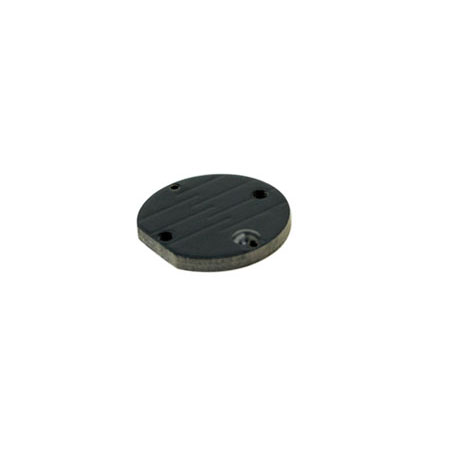
Industrial high-temperature material construction provides a protected identity point for metal tools, equipment and process assets.
Under reference US-band test conditions on metal, read range reaches up to 2.5 m. Actual performance depends on the reader, orientation, mounting and environment.
The specified operating range is -40°C to +150°C, with storage conditions of -55°C to +200°C. Intermittent exposure is limited to: operation at 180°C for 10 hours; storage exposure at 250°C for 150 minutes or 280°C for 50 minutes.
NXP UCODE 8 supports EPC Class 1 Gen 2 / ISO 18000-6C workflows. Two 2 mm mounting holes are specified. The specified installation method is adhesive backing or screws.
RGW-D20 Industrial RFID Tag
| Product model | RGW-D20 |
|---|---|
| Protocols | EPC Class 1 Gen 2 and ISO 18000-6C |
| Frequency | US 902-928 MHz; EU 865-868 MHz |
| Chip | NXP UCODE 8 |
| Memory | EPC 128 bits; User 0 bits; TID 96 bits |
| Function | Read and write |
| Write endurance | 100,000 cycles |
| Data retention | 50 years |
| Reference read range | Up to 2.5 m in the US band when mounted on metal |
RGW-D20 Industrial RFID Tag
| Dimensions | Ø20 mm |
|---|---|
| Thickness | 2.8 mm at the chip; 2.1 mm elsewhere |
| Mounting-hole structure | Two 2 mm mounting holes are specified. |
| Material | Industrial high-temperature material |
| Installation | adhesive backing or screws |
| Weight | 1 g |
| Applicable surface | Metal |
RGW-D20 Industrial RFID Tag
| Ingress protection | IP68 |
|---|---|
| Operating temperature | -40°C to +150°C |
| Storage temperature | -55°C to +200°C |
| Intermittent thermal exposure | operation at 180°C for 10 hours; storage exposure at 250°C for 150 minutes or 280°C for 50 minutes |
| Certifications | REACH, RoHS and CE |
| Warranty | 1 year |
| Performance note | Read range and environmental endurance depend on installation, exposure duration and site conditions |