
Chain of custody
Clinical samples require accountable handover and reliable sample identity throughout the workflow.
Medical & Health
A carefully positioned capability area: REAOX has delivered laboratory workflow RFID work for a major hospital in South China and has patent activity around RFID intelligent specimen containers, but North American medical deployment requires strong local partners and regulatory ownership.
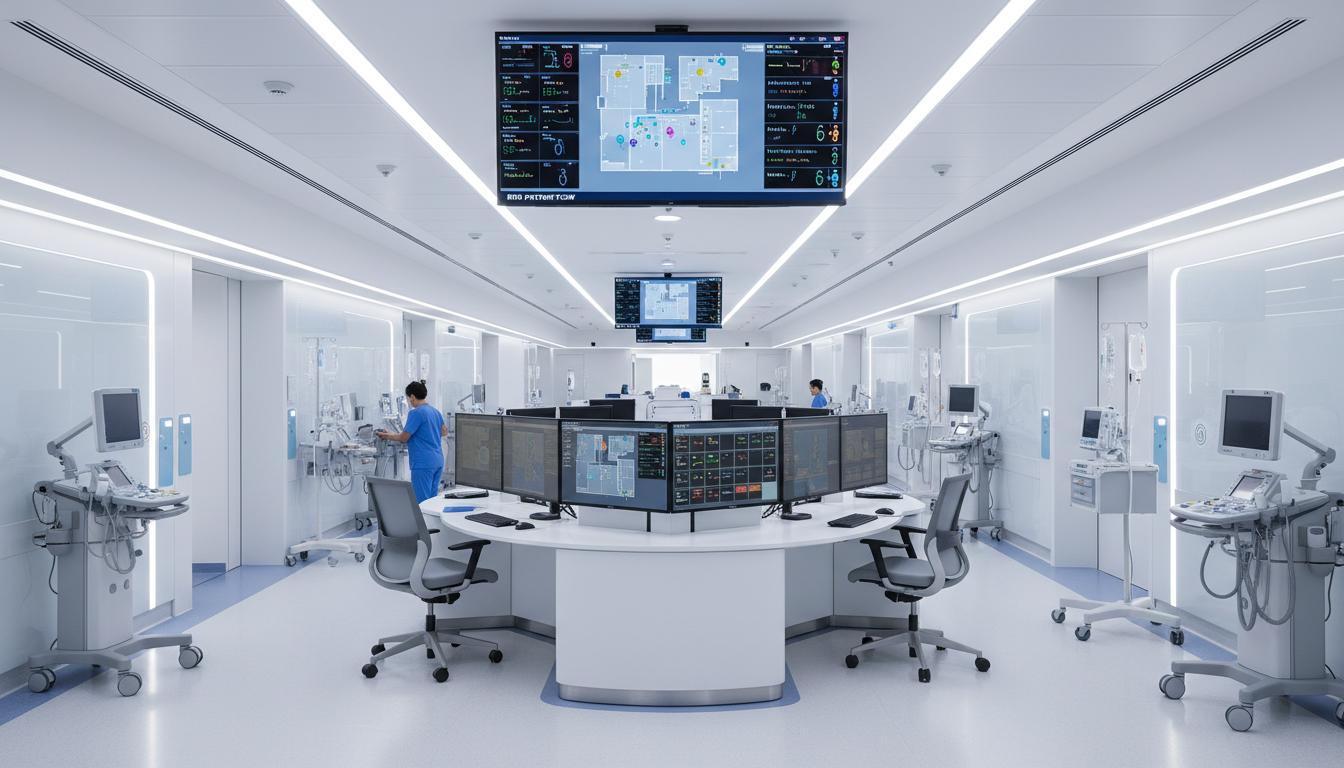
Medical positioning stays technical and partner-led, with clear compliance boundaries for North America.
Operational Reality
REAOX has designed clinical specimen workflows, but North American hospital deployment requires FDA, HL7/FHIR, and HIPAA readiness that is not currently in the stack. The page is intentionally framed as capability and engineering partnership.
Challenges
Clinical samples require accountable handover and reliable sample identity throughout the workflow.
Laboratory workflows often require multi-tag reads rather than one-at-a-time barcode operations.
Freezers, autoclaves, chemicals, and transport conditions create tag durability requirements.
LIS, EHR, and laboratory automation integration must be handled explicitly in any deployment.
Buying Signals
These signals help buyers, integrators, and operating teams decide whether the page matches a real project instead of a general technology interest.
Signal
North American medical work is realistic only when a qualified local partner can own regulatory, procurement, privacy, and clinical validation responsibilities.
Signal
The strongest fit is sample identity, handover, rack-level verification, and exception visibility rather than a general hospital asset-tracking claim.
Signal
REAOX can discuss engineering experience around RFID intelligent specimen containers and laboratory workflows without overstating certification readiness.
Signal
Every discussion should identify FDA, HL7/FHIR, HIPAA, LIS, validation, and deployment ownership before any product or pilot commitment.
System Method
For B2B RFID projects, the right answer is rarely a single model number. REAOX structures each solution as a stack: capture the item reliably, convert the signal into a clean event, then make that event useful to the operating team.
Tags, readers, antennas, terminals
Start with the physical reality: material, distance, movement, shielding, operators, and where a reliable read event can actually happen.
Open device layerFiltering, device abstraction, APIs
Turn raw reader signals into usable workflow events, then connect them to ERP, POS, WMS, MES, LIS, or a custom business system.
Open middleware layerScreens, exceptions, reports
Give teams the business workflow they need: search, verify, transfer, inspect, reconcile, report, or escalate exceptions.
Open application layerHardware & Platform
Capability pattern for sample chain-of-custody and rack-level workflows.
RFID-based equipment and medication inventory patterns for hospital environments.
Project-specific integration model based on documented Chinese hospital implementation patterns.
Project Path
This is the practical path for buyers who need confidence before committing budget, operational change, or system integration resources.
Confirm the business result, physical scene, existing systems, and the buyer's risk boundary.
Validate tags, read zones, operators, software events, and the first meaningful operating report.
Connect the RFID event layer to the customer's system of record and define exception workflows.
Standardize product selection, installation rules, training, support, and rollout documentation.
Recommended Product Path
These links are not a final bill of materials. They help buyers move from the solution story into concrete models, specifications, images, and comparable alternatives.
HF workstation
Desktop HF reading for controlled workstation, sample, rack, or card verification workflows.
Embedded reader
Small embedded HF reader for custom racks, cabinets, laboratory devices, or workflow equipment.
Module
Module option for custom integration where physical enclosure, power, and host interface are defined by project.
Read-zone design
Useful reference point for read-zone discussions when sample racks or assets require antenna planning.
Proof Point
Medical is included to show REAOX experience and technical IP, not to imply near-term direct hospital market entry in North America. REAOX has delivered laboratory workflow RFID work for a major hospital in South China and has applied for two Chinese patents related to RFID intelligent specimen containers. FDA 510(k), HL7/FHIR integration, HIPAA readiness, procurement access, and clinical validation would require a strong agent, B2B intermediary, or local partner that can handle the regulatory and commercial burden.
Next Step
The fastest way to qualify a project is to share the operating scene, assets, current software, and where the data breaks today. REAOX can then recommend tags, devices, middleware scope, and pilot boundaries.
Include
Specimen, rack, container, asset, custody step, storage condition, and the exact point where manual control fails.
Include
Who owns regulatory, clinical validation, procurement, privacy, installation, and after-sales responsibility.
Include
LIS, EHR, HL7/FHIR, barcode system, laboratory automation, and data-retention requirements.
Include
Region, validation requirements, privacy constraints, and whether the discussion is engineering-only or deployment-oriented.
Questions & Answers
No public claim is made for FDA clearance, 510(k), or HIPAA compliance. Those are outside the current stack.
REAOX can support engineering partnership discussions for clinical chain-of-custody workflows, especially where shared regulatory responsibility is clear.